Factorial Energy (FAC): the solid-state battery bet that has to prove itself in 2027
Oct 7, 202612 min read
Sergey Monin, Author
I'm writing about a company that I think is interesting and risky in equal measure. Figures come from Factorial's SEC filings and shareholder letter unless stated. Where a number is my own arithmetic, I say so. This is analysis, not investment advice.
Why solid-state batteries are a big deal
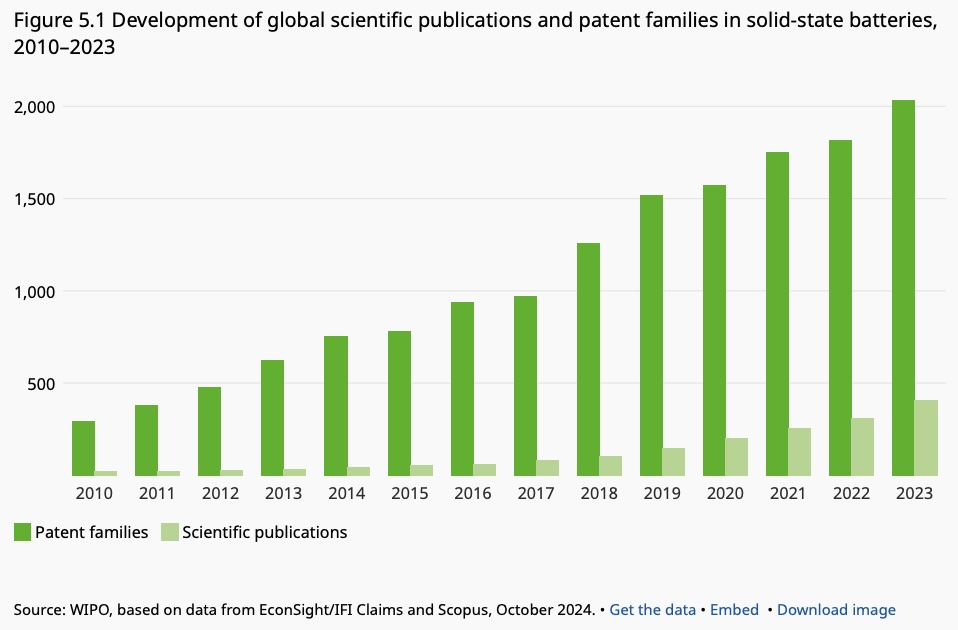
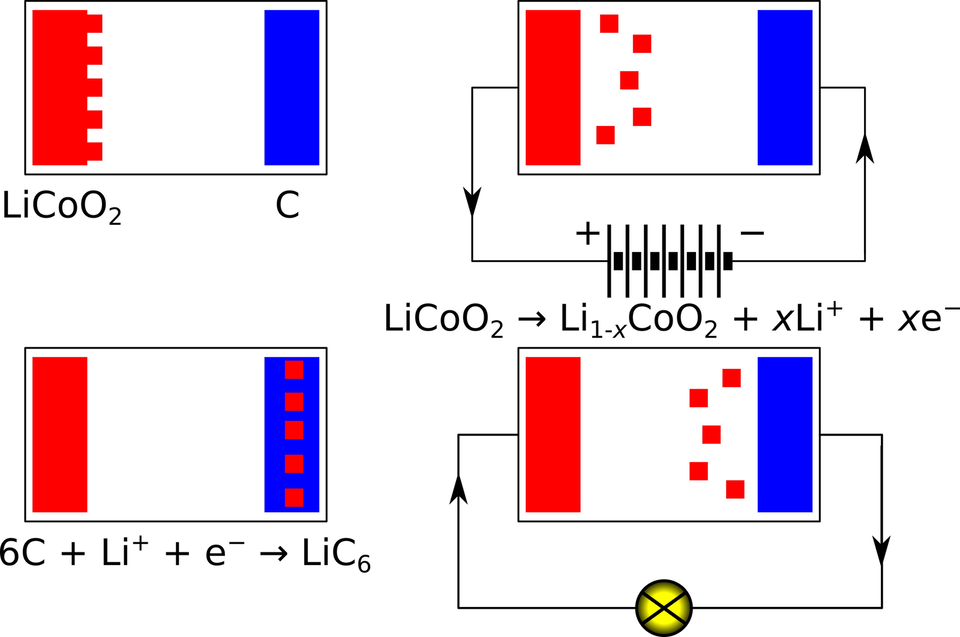
Almost every electric car today runs on a lithium-ion battery. Inside the cell, lithium ions travel through a liquid electrolyte between two electrodes. That liquid is the weak point. It is flammable, it limits how much energy you can pack into a given weight, and it forces designers to use graphite for the negative electrode because lithium metal, which stores far more energy, grows needle-like structures called dendrites in a liquid and eventually shorts the cell.
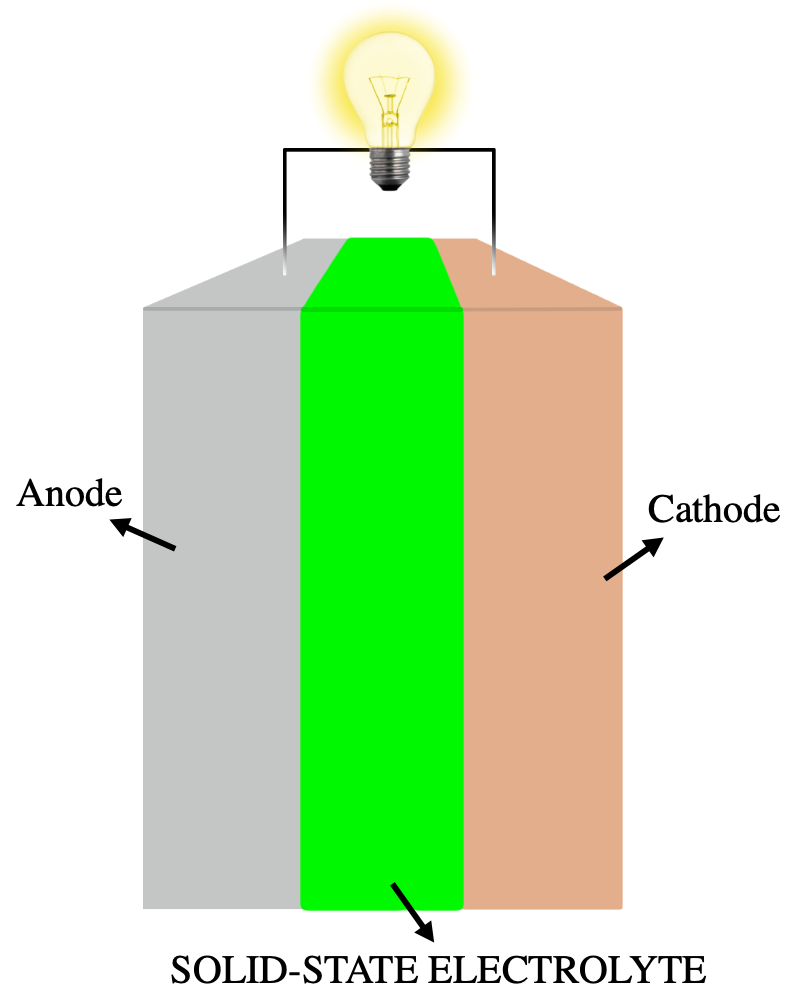
A solid-state battery replaces that liquid with a solid or near-solid material. In principle that does three things at once. It makes the cell safer. It allows a pure lithium-metal electrode, which raises the energy stored per kilogram. And it can allow faster charging. Scientific American puts the prize at 250 to 400 watt-hours per kilogram or more, against roughly 250 to 300 for today's cells, which means a longer range from a lighter pack.
The catch is manufacturing. Making a solid electrolyte that conducts ions well is the easy part to describe and the hard part to do. Tiny gaps between the solid layers choke the flow of ions, and lithium can build up and crack through brittle material. The same Scientific American piece notes that at least 14 Western battery start-ups have gone under since January 2025 while trying to scale up. Whoever turns this chemistry into a product people can buy at a reasonable cost will matter. Most who try will not.
Two ways to build a solid-state cell
There are broadly two approaches, and Factorial and QuantumScape sit on opposite sides.
The ceramic route. QuantumScape uses a hard ceramic separator. Ceramic has excellent properties: it is a strong barrier and conducts ions well. QuantumScape's own team has acknowledged in Scientific American that it gives "the best material properties" but is "brittle and very, very challenging to make." Think of a thin ceramic plate, like a dinner plate, that has to be produced in huge volumes, stacked, and flexed thousands of times as the battery charges and discharges without cracking.
The polymer route. Factorial's main platform, called FEST, uses a gel-like polymer electrolyte combined with a lithium-metal anode. It is described as "quasi-solid", meaning not fully solid. The practical advantage is that the cells can be made on equipment that already exists. Factorial says FEST is compatible with up to 80% of existing lithium-ion manufacturing equipment, and that lets it skip building a new kind of factory.
Toyota is the example people use for how hard the third path is. It has chosen sulfide-based solid electrolytes, which conduct very well but must be made in ultra-dry rooms because they can react with moisture and release hydrogen sulfide. They also tend to crack away from the electrodes as the battery cycles. Toyota was saying in earlier years that it was on track for production in 2025. Current reports point to 2027 or later, and it is working with Sumitomo Metal Mining and Idemitsu on materials. I would not call that failure. I would call it a demonstration of how slow the ceramic and sulfide paths are, even for the world's biggest carmaker.
Is Factorial's route better? I would not say that. It is the more practical route today, and the end state may belong to fully solid designs. Factorial's own prospectus says that hybrid designs "may be inferior" to true solid-state batteries. What the polymer approach buys is time to market, and in this industry time to market matters.
What Factorial has actually shown
The evidence so far is real, which separates it from many battery stories.
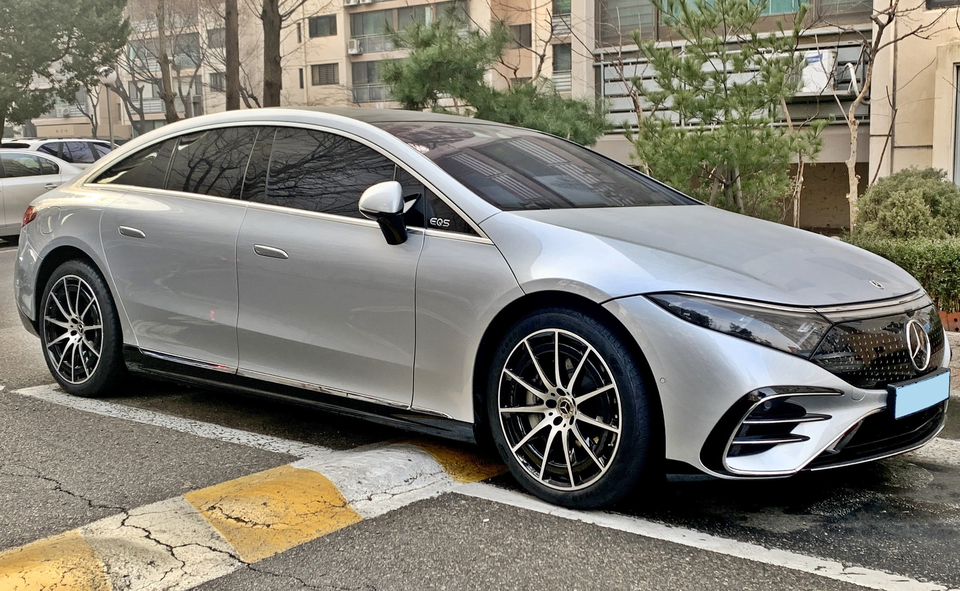
In 2025 a lightly modified Mercedes-Benz EQS fitted with Factorial cells drove 1,205 kilometers from Stuttgart to Malmö on a single charge. Factorial delivered what it describes as the first announced B-samples of 100+ Ah solid-state lithium-metal cells to an automaker in September 2025. A B-sample is a more mature prototype than an A-sample, built closer to production design so the customer can test it in a vehicle. In June 2026 the company integrated its cells into a Dodge Charger Daytona development vehicle with Stellantis and began road testing.
The Q2 shareholder letter reports a demonstrated 390 Wh/kg in cells delivered to a global OEM customer, with a goal of about 450 Wh/kg by the end of the year. A Stellantis validation of 77 Ah cells has been reported at 375 Wh/kg and more than 600 cycles. The letter also says its fabrication lines have produced and shipped thousands of automotive-sized FEST cells to partners.
So the technology is not an idea on a slide. The question is whether it can be made in the millions, at a cost that works, and last long enough in a car. The company's own filing says solid-state battery production "has never been done at massive commercial scale" and that it has a "limited frame of reference from which to evaluate long-term performance." I take that sentence seriously.
The partners
Factorial's partner list is its biggest asset. Mercedes-Benz, Stellantis, Hyundai and Kia have all worked with it, and it also has development agreements with PowerCo (Volkswagen's battery arm) and Karma Automotive. The company says the automotive partnerships represent 26% of the 4.4 million EVs sold in the United States and Europe in 2024.
Two of them are also shareholders with seats at the table. Mercedes-Benz Corporate Investments reports 8.1% of the stock (8.67 million shares) in its Schedule 13D and Uwe Keller, a Mercedes battery executive, sits on the board. Stellantis and its affiliates report 9.5% of the Series A class and have a board seat held by Jon Nelson. The founders, Dr. Siyu Huang and Dr. Alex Yu, own about 19.1% of the stock but control about 62.9% of the votes through shares that carry ten votes each.
I'd correct two details that commonly get repeated. The Mercedes stake is 8.1%, not 9.47%, according to its 13D. And Dieter Zetsche, the former chairman of Daimler from 2006 to 2019, is on Factorial's board of directors. He is not part of management. He has advised and invested in Factorial since 2021, and his seat is a signal about credibility, not about operations.
How does this compare with QuantumScape? QuantumScape has Volkswagen's PowerCo as its anchor partner, and Factorial has the broader list of automotive names. But a partner list is not the same as orders. The agreements are joint development agreements, which are not purchase commitments and which the filing says can be terminated. Under them, Factorial recorded $3.6 million of reimbursements in the first half of 2026. That shows the partners are paying for testing, not for batteries.
The first customers: drones, not cars
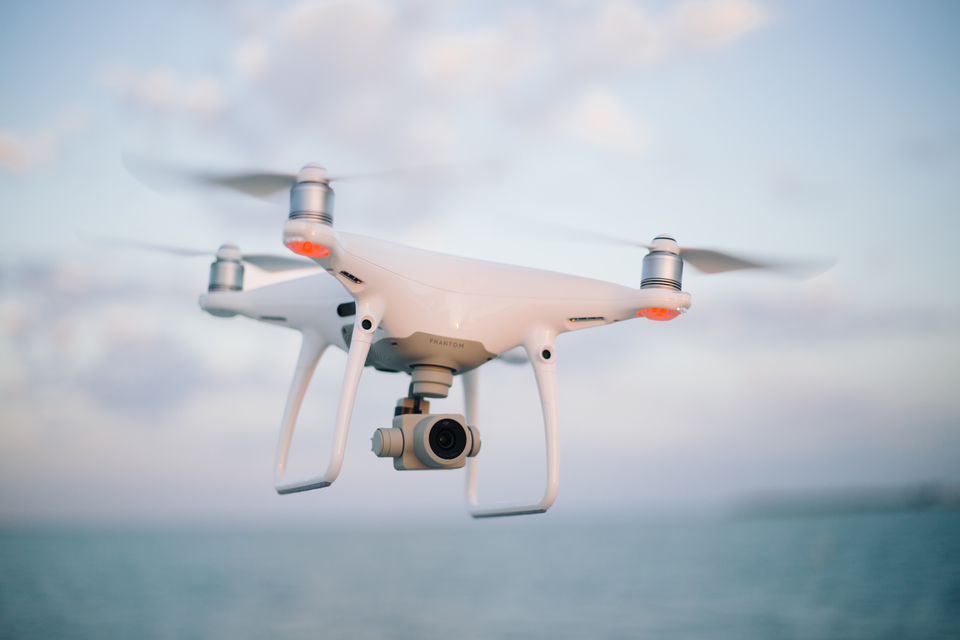
The first commercial revenue is likely to come from outside the car market. On July 24, 2026, Factorial announced its first commercial aerospace order, from a leading U.S. drone manufacturer, with cells integrated into packs by a U.S.-based integrator. Flight tests showed a more than 30% increase in range, and the company says it went from product design to a purchase order in six months. It has also announced collaborations with drone-pack integrators KULR in the United States, Tulip Tech in Europe and JRES in South Korea. The shareholder letter adds a first supercar battery order in January.
This matters because drones value energy density more than cost, so they can pay for an expensive battery today. Scientific American makes the same point and notes that both Factorial and QuantumScape are leaning into defense, where Factorial has funding from In-Q-Tel. The company expects first commercial revenue in 2027. The orders are small, and drones are a stepping stone, not the destination. Cars are the destination.
The China question
The race is not only Western. China already ships what it calls semi-solid-state batteries, a similar hybrid of solid and liquid. SAIC began delivering the MG4 with a semi-solid pack in December 2025, and WeLion, backed by CATL and Nio, ships a 150 kWh semi-solid pack in Nio vehicles at about 360 Wh/kg. SAIC says full solid-state cells are targeted for 2027, and as of this writing the all-solid-state timelines of CATL and BYD sit in 2027 and beyond.
This cuts two ways for Factorial. It shows that the hybrid approach is commercially real, which supports the claim that a semi-solid route is the practical path. It also means Factorial's route is not unique, and Chinese producers have scale, supply chains and cost advantages that Factorial does not have. The company's own filing names CATL among competitors with "significantly greater resources, experience and scale." Western automakers want non-Chinese suppliers for reasons of tariffs and security, and that is a genuine opening. It is a political tailwind, not a technical one.
Cash and valuation
Factorial completed its merger with Cartesian Growth Corporation III on June 5, 2026 and trades on Nasdaq as FAC. The deal implied an equity value of about $1.3 billion. The stock has since fallen sharply. Its 52-week range runs from about $4.24 to $25.33, and it recently traded around $5.50 to $6.30, depending on the source and the day. On about 107 million shares, that is a market capitalization of roughly $585 million.
At June 30, 2026 the company held $112.8 million of cash after receiving $92.0 million net from the merger and PIPE financing. Its net loss for the first half was $19.9 million, operating cash burn was $11.4 million, and its accumulated deficit is $275.5 million. For 2026 it guides to roughly $40 million of non-GAAP operating expenses and $13 million of capital spending. Capital spending was only $0.6 million in the first half, which fits its "capital-light" model of relying on partners to manufacture at scale.
The accounting position is straightforward. The 10-Q says that the substantial doubt about going concern has been alleviated and that cash is sufficient for at least twelve months, which is the legal minimum the accounting standard requires. The company has not given a longer runway in the material I read. My own arithmetic: if it spends about $53 million a year, as the 2026 guidance implies, cash at June 30 lasts into 2028. Spending is likely to rise as fabrication capacity expands in phases through the end of 2028. So a further raise before the revenue arrives is the base case, not a surprise.
The comparison with QuantumScape is where I'd be careful. QuantumScape's market capitalization is around $2.8 billion, as of early October 2026. Factorial's is about a fifth of that. But QuantumScape reported $904.7 million of liquidity in the first quarter, against Factorial's $112.8 million. Subtract cash and the gap narrows: roughly $1.9 billion of enterprise value for QuantumScape against about $470 million for Factorial, a ratio of about four to one, not five. I would not read that as Factorial being cheap because QuantumScape is "worse". QuantumScape's ceramic approach has, by its own team's account, the better material properties. It is harder, so it may or may not arrive. They are different bets, not a good one and a bad one.
The bear case
I'd want you to read this section closely, because a good story is the most expensive thing to own in a company that has not yet earned any revenue.
No revenue, and a long road to it. Factorial is a development-stage company with no revenue to date. First revenue is expected in 2027, and it will probably be small. Meaningful automotive volume is years away. Every dollar of cash until then comes from the merger proceeds or from selling more stock.
It will need more money. The cash covers the current plan, and the prospectus says the company expects to need "substantial additional capital in the future." Raising it with the stock near its lows means dilution. There are already 13.8 million public and 6.8 million private warrants at $11.50, 19.6 million options and 5.1 million restricted stock units outstanding, which are all potential new shares.
A large overhang of sellers. The resale prospectus registers 86.4 million shares for sale, which is more than 80% of the roughly 107 million shares outstanding, including shares from early holders, PIPE investors and the sponsor. The filing says the lock-ups on most of the merger shares have expired because the stock hit its price conditions. Executives also adopted Rule 10b5-1 selling plans in June.
The technology could be a stepping stone that gets passed. The company's own risk factors concede that hybrid cells may be inferior to fully solid-state ones. If a rival, whether QuantumScape, Toyota, Samsung SDI or a Chinese group, gets fully solid cells into production at a competitive cost by 2028 or 2029, a polymer-based cell could look like the transitional technology that it is. China is already shipping semi-solid packs at volume, and the advantage of a head start is smaller than it looks.
Partners are not buyers yet. The agreements are joint development agreements that can be cancelled, and the manufacturing arrangements are, in the filing's words, "non-binding" and still under negotiation. The capital-light model works only if partners such as SK On, with which Factorial signed a memorandum of understanding in July, actually build capacity. The model removes a capital burden and creates a dependence.
Concentration and control. Factorial depends on a limited number of customers and partners. The founders control the vote through super-voting shares and will keep majority control as long as they hold at least 62.7% of those shares, so ordinary shareholders have limited influence.
Reporting controls. The company reports a material weakness in internal control over financial reporting, and management concluded disclosure controls were not effective. Remediation is expected to run through 2027. This is common in newly public companies, but it deserves attention in a company where the numbers are small and the valuation depends on trust.
Geography and trade. Most production is in South Korea, many materials come from Korea, and the company faces tariff and export-license exposure, which grows with defense applications.
How I'd frame it
Is this a high-risk, high-reward bet? Yes, and I would say it more plainly: it is a venture investment that happens to trade on Nasdaq.
The case for owning it is simple to state. The technology is further along than most people assume, with cells in real vehicles and a first commercial order. The partner list is the best in the sector. The valuation of about $585 million is a fraction of the $1.3 billion at which the deal was struck, and the downside from today's price is partly a story of forced and expected selling, not of failed engineering.
The case against is equally clear. The part that was hard for a decade, making the cell work, is now mostly done in the lab. The part that remains hard is making it cheaply, in volume, for years, and being paid for it before the money runs out. Neither a partner list nor a low market cap tells you whether that will happen.
If I were sizing it, I'd treat it as an option and not as a core holding: an amount I could lose entirely without changing my life. The signals I'd watch are concrete. Does first revenue arrive in 2027 as promised? Do the joint development agreements turn into purchase orders? Does the company raise money, and at what price? And do the SK On talks produce real manufacturing capacity? Those four answers will tell you more than any battery chart.
Sources
- Factorial Energy Form 10-Q for the quarter ended June 30, 2026
- Factorial 424B3 prospectus supplement, September 2026
- Factorial Q2 2026 shareholder letter
- Mercedes-Benz Corporate Investments Schedule 13D and Stellantis Schedule 13D
- First commercial aerospace order, July 24, 2026
- Dieter Zetsche joins the board, Boston Globe
- Scientific American: Can QuantumScape and Factorial Energy mass-produce solid-state batteries?
- SAIC semi-solid-state rollout and Chinese battery tech race, iEVChina
- Toyota's solid-state plans
Check it against the live data.
Everything referenced here comes from filings, and the aggregate figures are public.
No comments yet
Loading the discussion…