Ursa Major and Bleichroeder III: a real shortage, a rich price
Oct 7, 202613 min read
Sergey Monin, Author
I follow Inflection Point's deals closely, and this one is a defense hardware company, which I do not take lightly. I'm generally anti-war. I'm also an investor, and the conflicts in Ukraine and the Gulf have drained the stockpiles that these companies exist to refill. Whether you want to own that is your decision. The analysis below is mine, based on the SEC filings, and is not investment advice.
The deal in one paragraph
On August 24, 2026, Bleichroeder Acquisition Corp. III (Nasdaq: BCCQ) agreed to merge with Ursa Major Technologies. The SPAC raised $345 million in its July IPO, and its management team is the one behind Inflection Point, the group that took Intuitive Machines and USA Rare Earth public. After closing, which is expected in the first quarter of 2027, the company would be renamed Inflection Point Mach X Bleichroeder Corp. and trade as IPXX. The deal values Ursa Major at about $1.6 billion before the money goes in. The investor presentation shows a pro forma equity value of $2.4 billion, $670 million of cash on the balance sheet and an enterprise value of $1.7 billion. Those figures assume nobody redeems their shares, and I'll come back to why that matters.
What Ursa Major actually makes
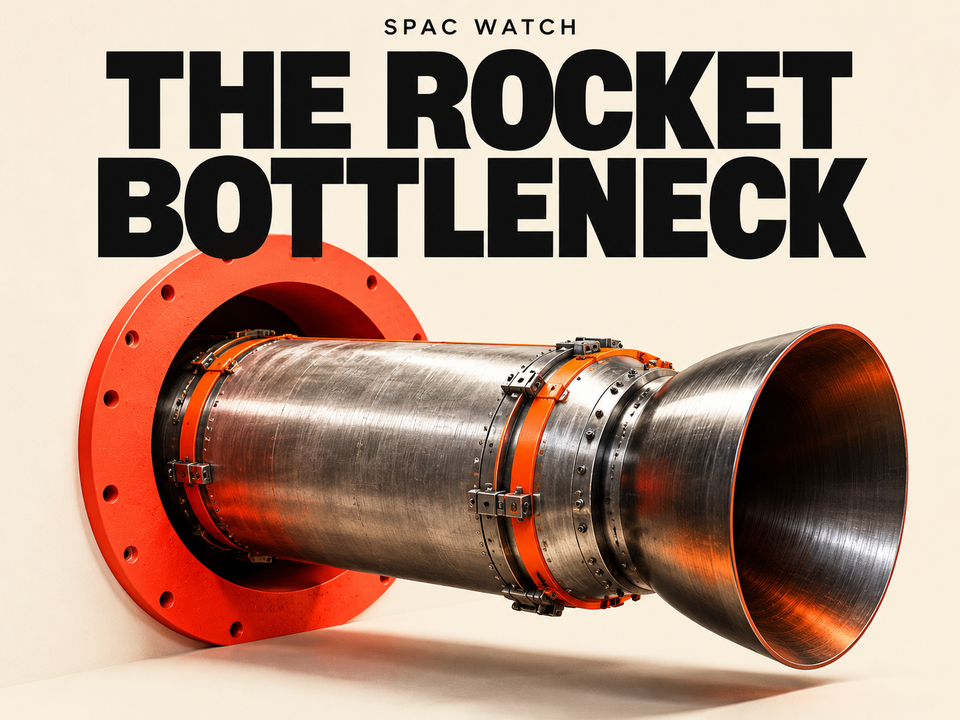
Most of the company's business is rocket propulsion for missiles. A solid rocket motor is the part of a missile that holds a block of solid propellant and burns it to push the missile. It is a cylinder of chemical fuel with a nozzle, not much more complicated than a very large firework, but it is hard to make well. The fuel has to burn evenly, the casing has to survive the heat, and the whole thing has to behave the same way every time. For decades only a handful of companies made them, and the Pentagon has been warning that this is a bottleneck.
Ursa Major has four lines of business, according to the presentation:
- Solid rocket motors, built on a production process it calls Lynx, which uses 3D printing to make components. Its motors are for tactical missiles and boosters.
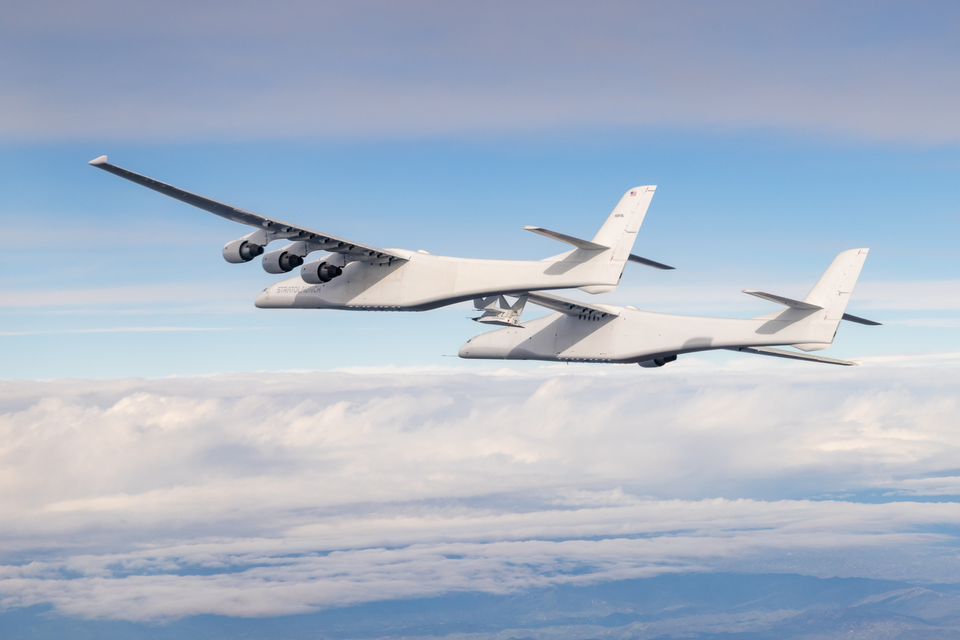
- Hypersonic engines. A liquid engine called Hadley, which supplies Stratolaunch, and one called Draper, which powers the company's own hypersonic missile.
- HAVOC, a hypersonic missile unveiled in February 2026. The company says it has a range of 300 to more than 1,000 nautical miles, carries a 250-pound warhead and costs about one-fourteenth as much as comparable weapons. It has flown successfully twice.
- In-space propulsion, small thrusters for satellites. It is the smallest line.
The company was founded in 2015 and has raised about $380 million in private funding. It has more than 360 employees across six facilities on nearly 500 acres. Headquarters and most production are in Berthoud, Colorado, with additive manufacturing in Youngstown, Ohio, and a test site at Galeton, Colorado that the deal money is meant to turn into a production campus.
One caution on the testing numbers. The presentation and the press release disagree on how many ground tests the company has run, so I won't quote that figure. Both documents agree on more than 140,000 seconds of hot-fire testing.
Can it manufacture at scale?
This is the real question, and the answer so far is "not yet, with a plan."
The Lynx line is the company's pitch. The presentation says the first motor was built in 29 days in 2024, the first flight test came in 2025, and the eighth solid-motor flight was completed in 2026. For high-volume explosive work, the plan is Project Kodiak, which builds the facilities that mix and cast the propellant. Phase 1 would reach up to about 100,000 pounds of energetic material a year, and casting capacity of more than 2,000 pounds a day, or roughly 500,000 pounds a year. That takes 18 to 22 months and more capital. Phase 2 adds larger mixers at a separate site and another 24 months.
HAVOC's scale-up is more speculative. The plan is an assembly pilot of 8 a year, then 20, 50 and 250, and 500 or more a year by 2030. The company expects capital spending of $85 million in 2027 and says the $350 million raise covers its needs through breakeven and the long-term production facilities.
Two details matter. First, the company is building a plant that handles explosives, which means a fire or accident could stop production, and most of its capacity sits in two states. Second, it depends on a small number of suppliers for ammonium perchlorate (the oxidizer in the propellant), liquid oxygen, kerosene and metal powders. Its intellectual property rests mostly on trade secrets rather than patents.
Customers and contracts
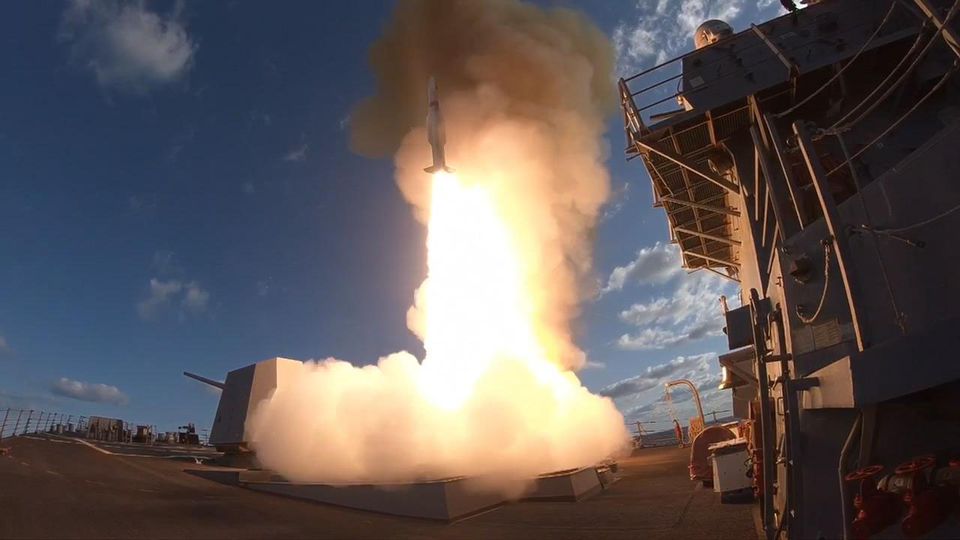
Substantially all revenue comes from U.S. defense customers. The Navy is the most important. On October 5, 2026, after the investor deck was published, the Navy awarded Ursa Major two contracts worth $137 million in total. About $91 million is for the motor of the Compact Air-to-Air Missile and about $46 million for the 10-inch motor of the Naval Modular Missile. Earlier, the Navy awarded $10 million in July to take the MK 104 motor, used in the Standard Missile family, through its critical design review and static-fire testing. The company also finished a $25 million cost-share program with the Navy and the Office of Strategic Capital in February.
Other named customers and partners include the Air Force, Army, Space Force, Stratolaunch, Draper, BAE Systems and RTX.
The deck also lists a near-term pipeline of about $2.8 billion across 2026 to 2028. Pipeline is not backlog. It is what the company hopes to win, including large opportunities such as a $280 million Army program. I could not find a backlog figure in the documents I read, and I'd want to see one in the merger proxy before trusting the revenue forecast.
The company's contracts also carry the standard government terms that can hurt: the government can terminate for convenience, and several programs, including MK 104 and the LCCM missile booster, are fixed-price, so cost overruns come out of Ursa Major's pocket.
The money: revenue, burn and what the cash buys
Revenue was $18.5 million in 2024 and $45 million in 2025, which is growth of about 143%. Management's 2026 estimate is about $100 million. For 2027 it shows roughly $200 million, which it calls a "revenue opportunity" rather than a forecast. The deck breaks that figure into $120 million of backlog and near-term follow-on work, $63 million of opportunities it rates as high-probability and $16 million of other opportunities. So only part of the 2027 number is contracted, and the deck does not say how much.
The deck's financial table gives a clearer picture of how the business is changing:
| 2024A | 2025A | 2026E | 2027E | |
|---|---|---|---|---|
| Revenue | $18.5M | $45M | ~$100M | ~$200M (opportunity) |
| Gross margin | 27% | 44% | 50% | n/a |
| Capital spending | $12M | $17M | $37M | $85M |
| Year-end cash | $28M | $89M | $126M | n/a |
Margins are improving fast, from 27% to a projected 50%, which is what you would hope to see as production scales. Capital spending is rising faster than revenue, though, and cash has been funded by outside money: year-end cash grew from $28 million to $126 million while the company burned through its own operating needs. The deck does not give operating expenses or a burn rate, so I cannot tell you how many months of runway the $670 million buys. That is the first thing I would look for in the merger proxy.
The deal itself is straightforward on paper. Sources are $1.6 billion of Ursa Major equity rolled over, $345 million in the SPAC's trust account and a $350 million PIPE (private investment in public equity), a total of $2.3 billion. Uses are the same $1.6 billion to the sellers, $670 million of cash to the balance sheet and $25 million of expenses.
Here is what is less obvious. The PIPE is not common stock. It is mostly Series A convertible preferred, with $242.5 million due at closing at $12.00 a share, plus $107.5 million of pre-funded preferred paid near signing at about $10.20. The preferred pays a dividend of 10% in kind or 8% in cash, ranks ahead of common stock in a liquidation, converts to common at $12 and comes with a warrant for every share. The investors paid above the $10 reference price, which is a vote of confidence, but they also bought protection and upside that ordinary shareholders do not have.
The share count also needs care. The presentation's 236.8 million pro forma shares are made up of 160.0 million for Ursa Major's owners (67.6%), 34.5 million for the SPAC's public holders (14.6%), 30.7 million for PIPE investors as converted (13.0%) and 11.5 million founder shares for the sponsor (4.9%). That count leaves out about 48 million warrants: 8.6 million public, 8.5 million private and about 30.7 million attached to the PIPE. Fully diluted, the company is closer to 285 million shares than 237 million.
And the cash is not guaranteed. The $670 million assumes zero redemptions, while recent SPACs have commonly seen around 90%. The deal requires a minimum of $150 million in cash. Because the PIPE alone is $350 million, the company can close even if every public share is redeemed, which raises the odds of closing but cuts the cash on the balance sheet to roughly $325 million. That would make the runway much shorter than the headline $670 million suggests. The presentation does not give a burn rate I could read reliably.
Why the demand is real
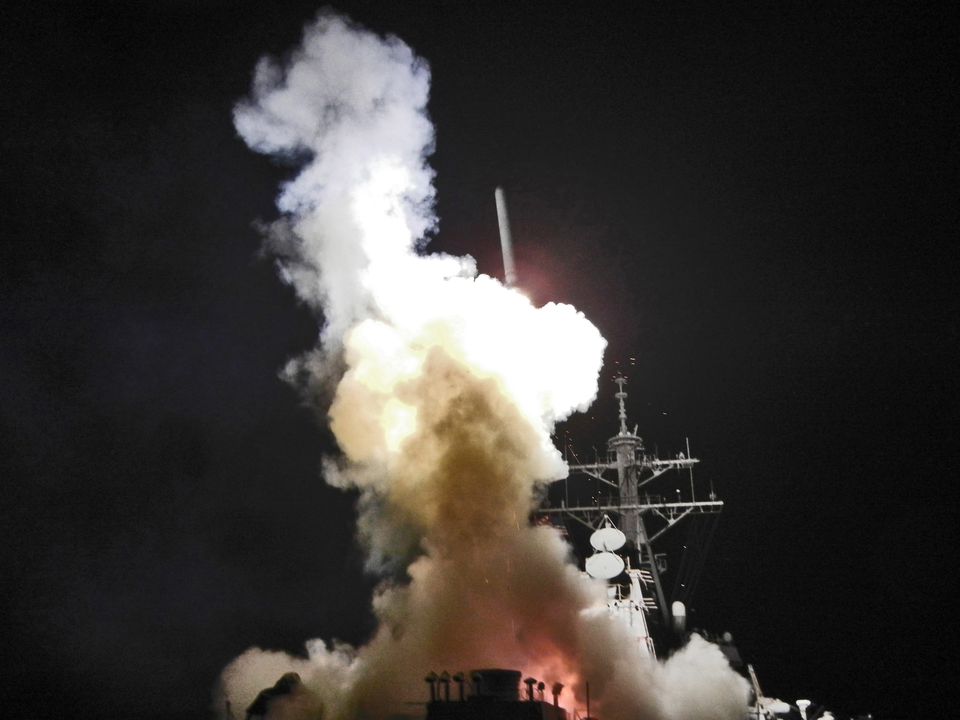
The shortage is not a story. The Iran war has consumed a large share of U.S. interceptors and missiles. The Center for Strategic and International Studies estimates that about two-thirds of the pre-war Patriot interceptor inventory has been used and that the THAAD inventory has been cut by half. CNN reported that roughly 30% of Tomahawks and around 20% of SM-3 and SM-6 missiles were expended. Breaking Defense reports that stockpiles of solid rocket motors themselves are dwindling. Analysts, including Mark Cancian, say the constraint is production capacity, not money.
The money is on offer. The fiscal 2027 request is $1.5 trillion for defense overall, and the munitions procurement request is $76.3 billion, against $26.8 billion in fiscal 2026. The presentation uses a broader "missiles and munitions" figure of $95.0 billion, up from $29.8 billion in fiscal 2025. It then says the budget grows at an 88% annual rate over those two years, but by the deck's own numbers the rate is about 78%.
There are two reasons not to take the budget at face value. First, about 82% of the munitions procurement money in the request sits in a reconciliation bill that Congress has not passed. Second, the Center for a New American Security found that none of the seven programs it examined would deliver new munitions faster than before. Spending authority and delivered motors are different things.
Competition is also changing. The Pentagon has put $1 billion into L3Harris's missile and rocket motor unit, formerly Aerojet Rocketdyne, which is preparing a public offering, and the field includes Northrop Grumman and newer entrants such as Anduril, X-Bow and Castelion. Ursa Major's argument is flexibility and speed, not scale.
The Inflection Point record
Inflection Point's team has a strong record of finding unconventional targets, and the results back it up. USA Rare Earth had a strong debut. Intuitive Machines, which closed in 2023, traded around $15 on October 6, 2026, above its $10 SPAC reference price, though its 52-week range runs from $7.78 to $46.75. The one weak debut is Merlin Labs, which began trading in March 2026. Its 90.3% redemptions do not count against the sponsor, since levels like that have been typical for 2026 SPACs and say more about the market than about the deal. Compared with most sponsors, this is a good record, and it is a large part of why Ursa Major deserves a close look. The question here is not who is behind the deal. It is what price you pay for the company after it closes.
What I think it's worth
I built a simple scenario model so the assumptions are visible. It is a judgment call, not a prediction. The approach is to estimate 2029 revenue, apply a multiple to it, add the cash left, and discount the result back at 20% a year, which is what I'd demand for this kind of risk.
| Scenario | Probability | 2029 revenue | EV / sales | What happens | Value per share today |
|---|---|---|---|---|---|
| Bear | 35% | $250M | 3x | Programs slip, cash burns, the preferred keeps its claim ahead of common | about $1.40 |
| Base | 45% | $500M | 5x | Navy motors ramp, HAVOC reaches small production | about $6.65 |
| Bull | 20% | $900M | 6x | Munitions budget arrives, Ursa Major becomes a second-source supplier | about $13.30 |
The probability-weighted value is about $6.15 per share, and I'd treat anything between $4 and $9 as the honest range.
The sensitivity is the useful part. To earn 20% a year from a $10 share price, 2029 revenue would need to reach about $800 million at a 5x multiple, or about $670 million at 6x. That is more than 15 times 2025 revenue in four years. It is possible, and the market for these weapons is large enough to allow it, but the price assumes it will happen.
The deal's own multiples say the same thing. At the $1.7 billion enterprise value, the stock trades at about 38 times 2025 revenue, 17 times management's 2026 target and 8.5 times the 2027 "opportunity". For reference, Kratos trades at about 6.7 times sales, Karman at about 17 times, and when L3Harris bought Aerojet Rocketdyne in 2022 it paid about 2.1 times sales ($4.7 billion on roughly $2.2 billion). Rocket Lab and Firefly trade much higher on small revenue, so the market has been generous to space and defense growth stories. I am assuming that generosity does not last for three years.
Warrants, the merged stock and the odds of closing
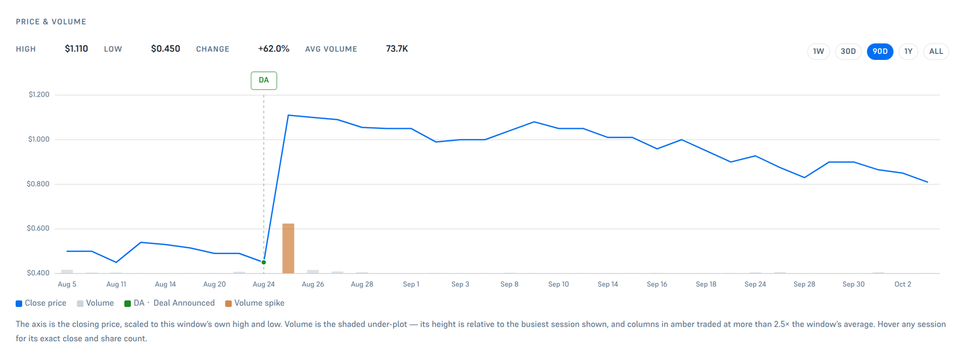
The warrants (BCCQW). They closed at $0.45 the day before the deal was announced, jumped to $1.11 the day after and have since eased to $0.81, which fits the pattern of warrants losing value across the market. Each one buys a share at $11.50 and has five years from closing to run. A Black-Scholes estimate with 60% volatility, an 80% chance the deal closes and a 40% haircut for the redemption feature and dilution gives about $1.00 if the merged stock trades at $6, $1.65 at $8 and $2.35 at $10. So $0.81 is roughly fair if my $6 estimate is right, and cheap if the stock holds near $8 or above. In other words, the warrant market is already pricing the merged stock well below $10.
The merged common stock (IPXX). At $10 I would pass. At my estimate it's priced for the base case at best. I'd get interested in the $5 to $7 range, or at any price if the S-4 shows a backlog that supports the revenue forecast.
The odds of closing. SPAC Watch's model shows 75%. I'd put it a little higher, perhaps 85% to 90%, because the PIPE alone satisfies the $150 million cash condition. The remaining risks are the shareholder vote, the S-4 effectiveness, antitrust clearance and a market that turns against SPACs. If the deal fails, the SPAC has until July 8, 2028, about 640 days, to find another target.
Risks
The risk list in the presentation is long, and most items matter.
- Early stage. SRM development began in 2024, HAVOC has two successful flights and Draper was flown twice in eight months. The company is not profitable and says it needs substantial additional capital through 2030.
- Government dependence. Substantially all revenue comes from defense agencies. Budgets can change, pipeline may not convert, contracts can be terminated and fixed-price work can lose money.
- Customer concentration among a few agencies, primes and space customers.
- Manufacturing. Handling explosives, the Lynx and Kodiak ramps, limited suppliers and a reliance on AI-enabled additive manufacturing. A single accident would be severe.
- People. There is a new CEO since February 2026, an interim CFO since May, a new solid-motor president and a new COO, with a chief revenue officer search under way. Competing for talent with SpaceX, Blue Origin, Lockheed Martin and Northrop Grumman is hard from Colorado and Ohio.
- Regulation and security. Export controls, facility clearances and the handling of classified information.
- Deal risks. Redemptions, conflicts of interest for the sponsor, dilution from convertible securities and warrants, transaction costs and a possible failure to close before the SPAC's deadline.
- Projections. The 2026 and 2027 figures are unaudited management estimates. Margin expansion at scale is unproven.
The bear case, in short
The shortage is real but the revenue has not arrived. The Navy contracts are development and qualification work, not volume production. Congress has not passed most of the money. The preferred stock sits ahead of the common. Redemptions could cut the cash in half. And the price already assumes a revenue path that few companies achieve.
The verdict
Ursa Major is a real company in a real shortage with real Navy contracts, and I would not bet against it surviving. At the deal's reference price of $10, though, the merged stock is expensive against my estimate of about $6. The warrants are the better way to own the story before the merger, and they make sense only if you expect the stock to hold above $8 after closing. I would revisit the common after the S-4 shows backlog, burn rate and the actual redemptions.
Sources
- Investor presentation, Exhibit 99.2 and press release, Exhibit 99.1
- Business Combination Agreement, August 24, 2026
- Bleichroeder III registration statement for the founder shares and warrant terms; BCCQ and BCCQW prices and the deck's financial tables from SPAC Watch's own records
- Navy awards Ursa Major $137M
- Dwindling stockpiles of solid rocket motors, Breaking Defense; CNAS on munitions and the FY27 budget; Pentagon's $1B stake in L3Harris missile unit
- Merlin Labs closing
Our valuation model is a set of judgment-based scenarios, not a forecast. Change the inputs and the answer changes.

Check it against the live data.
Everything referenced here comes from filings, and the aggregate figures are public.
No comments yet
Loading the discussion…